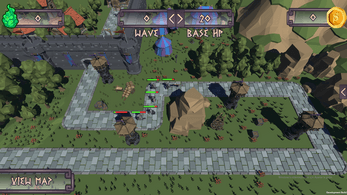
Siege: Tower Rush is a PC strategy project built around an anti-tower-defence premise: the player is the attacker, not the defender. This is my strongest systems design project because I owned the core game design, gameplay systems, programming, and level design.
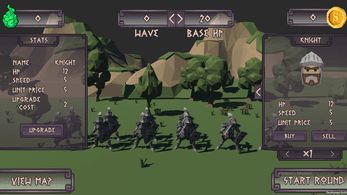
Project context
- Status: Demo build released (November 2020)
- Platform: PC
- Genre: Strategy / Anti-Tower Defence
- Engine: Unity (C#)
- Team context: Small collaboration (I handled systems, gameplay, and level design; UI/UX support came from a collaborator)
- Origin: Grew out of a game development coursework project into an EKSOT Games title
- Link: itch.io page
My role and responsibilities
- Designed the core game systems and strategic loop from scratch
- Implemented gameplay systems and progression in Unity/C#, with all programming written by hand, without AI assistance
- Built levels around player decision pressure and readability
- Structured both in-run and inter-run progression
- Tuned the game toward replayability rather than one-off novelty
Design focus
The central design challenge was turning genre inversion into a complete game loop, not a gimmick. Reversing roles is easy to pitch, but hard to make strategically coherent.
I focused on:
- clear attacker-side decision points
- readable rule sets with meaningful tradeoffs
- steady escalation across a run
- replayability through layered progression
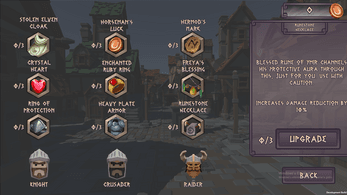
Progression structure
A key part of the game is combining short-term and long-term motivation:
- In-run progression: gold-based upgrades and tactical adaptation during play
- Inter-run progression: persistent talent growth that carries across sessions
This dual structure increased experimentation and gave players reasons to return, while keeping each run readable and strategically distinct.
Implementation notes
Because I handled both design and programming, system decisions were continuously checked against implementation reality. That reduced design drift and helped keep feature scope practical.
Outcome and lessons
This project is the strongest representation of how I work: designing player-facing systems that are understandable, scalable, and implementable.
Main lessons:
- progression needs clear purpose at both run and meta levels
- role inversion works when supporting systems are explicit and consistent
- replayability comes from decision quality, not only content volume